
About the Journal

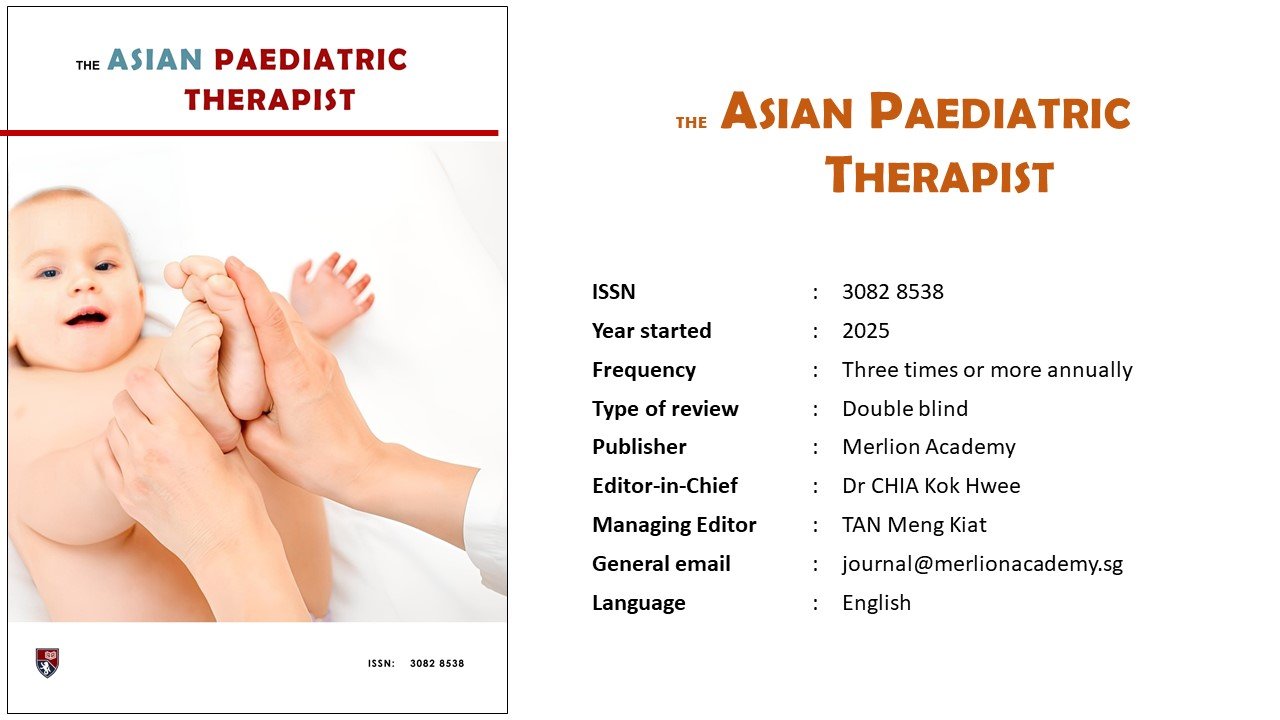
The Asian Paediatric Therapist is a trusted and inclusive peer-reviewed publication dedicated to advancing knowledge, research and best practices in paediatric therapy for clinicians, educators and researchers. The journal serves as a vital platform for the dissemination of high-quality research articles, clinical case studies, evidence-based reviews and expert commentaries focused on the assessment, treatment, and care of children with developmental, neurological, and orthopedic conditions.

Aiming to address the unique regional challenges and diverse cultural contexts found within Asia, the journal encourages submissions that reflect local innovations, culturally sensitive practice models, and comparative analyses of therapeutic approaches. Topics of interest include, but are not limited to:

- Paediatric physical, occupational, and speech therapy interventions
- Neurodevelopmental disorders and their management in Asian contexts
- Early intervention strategies and outcomes
- Rehabilitation technology and adaptive devices for children
- Family-centered care and community-based rehabilitation
- Education and training of paediatric therapists in Asia
- Policy, advocacy, and service delivery models relevant to Asian communities

The Asian Paediatric Therapist fosters interdisciplinary collaboration, aiming to bridge gaps between research, clinical practice, and health policy. It is committed to supporting professional development by offering a space for clinicians to share innovative practices and for researchers to present original findings that can shape the future of paediatric therapy across the continent. 

In addition to its scientific rigor, the journal values inclusivity and accessibility, ensuring that its content reaches a wide audience, including practitioners in both urban and rural settings, educators, caregivers, and policymakers. Through fostering a collaborative and informative environment, the journal aspires to enhance the quality of care and outcomes for children in Asia in the field of paediatric rehabilitation.

The journal  is positioned to become a leading voice in the region, promoting knowledge exchange and professional development while addressing trends, technologies, and policies vital to paediatric rehabilitation. Through rigorous peer review and a commitment to scientific excellence, it contributes to shaping the future of paediatric therapy in Asia and beyond.

It promotes collaboration among professionals in the field by sharing diverse views and fostering a sense of community among its readers. It encourages the submission of original contributions in the following areas that explore various aspects of paediatric therapy:

Original or Research Article
Should report original research not previously published or being considered for publication elsewhere. Submission of a manuscript to The Asian Educational Therapist gives the publisher the right to publish that article if it is accepted. Manuscripts may be edited to improve clarity and expression. 

Review Article
Comprehensive and in depth literature reviews of existing research that synthesise current knowledge and identify gaps in the field. Systematic review with meta-analysis should be submitted to this section.

Case Report or Review
Detailed analyses of real individual cases that illustrate the application of intervention or therapeutic techniques and their impact on clients. Articles that offer practical advice, innovative approaches, and best practices for educational therapists working in various settings.

Editorial Article
These are usually submitted by the journal editors, about any cutting edge topics that relates to educational therapy practices and their implications for future research and practice, maximum 4000 words will be welcomed for consideration.

Summary of Meeting
Brief of conferences in up-to-date topics of educational therapy research and relevant fields will be considered for publication in the journal.

Opinion Article or Practical Insights
Article that represent an author's viewpoint on a topic, including interpretation of research, medhods, theories or controversies. An opinion piece often includes personal thoughts, beliefs, or feelings or a judgement or conclusion based on facts. The goal may be to persuade or influence the reader that their position on this topic is the best.


This journal utilises LOCKSS (Lots of Copies Keep Stuff Safe) and CLOCKSS (Controlled LOCKSS) for digital archiving. LOCKSS distributes content across a network of libraries, while CLOCKSS operates a dark archive that makes content freely available after a trigger event, ensuring content remains accessible.

Current Issue

Vol. 1 No. 1 (2025)
Published: 2025-08-18
View All Issues